SK Siltron CSS Secures Conditional Commitment from U.S. Department of Energy for a Loan of Up to $544 million
Bay City, Michigan – Feb 22, 2024 – SK Siltron CSS, a global leader in manufacturing silicon carbide (SiC) wafers, announced today that it has secured a conditional commitment from the U.S. Department of Energy (DOE) for a loan of up to $544 million.
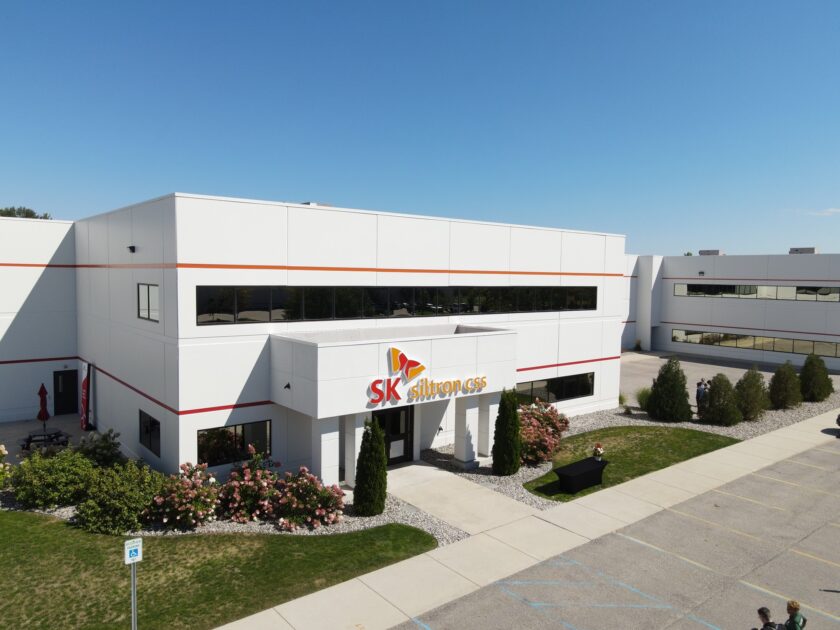
The loan to be made under the Advanced Technology Vehicles Manufacturing (ATVM) Loan Program administered by the DOE’s Loan Programs Office (LPO) is meant to expand American manufacturing of high-quality SiC wafers, a key component in electric vehicle (EV) power electronics. The loan will increase manufacturing capacity at SK Siltron CSS’ Bay City, Michigan facility and create up to an additional 200 skilled jobs, for an estimated total of 450 workers by project completion in 2027.
“This project is an important step towards ensuring a resilient and
robust supply chain in the United States, and we are proud to bolster
domestic semiconductor manufacturing,” said SK Siltron CSS CEO Jianwei
Dong, Ph.D. “Completion of our facility with support from ATVM funding
not only strengthens our nation’s manufacturing technology, but also
fuels job creation, laying the foundation for innovation and economic
growth in Michigan and the broader United States.”
SK Siltron CSS has already doubled the initial estimated number of jobs it would create in Michigan, currently employing 250 highly skilled workers across its facilities in Bay City and Auburn, on the heels of a $300 million investment in the Bay City facility, announced in 2021.
SiC wafers are more efficient at handling high power and conducting heat than incumbent silicon, and semiconductors made with these wafers can mean faster charging times and 5%-10% farther driving range for EVs. However, the high-quality SiC wafers required to maximize these performance improvements are currently under-supplied, and demand is expected to rise with EV sales.
Final approval of the loan remains subject to completion of certain closing conditions; and if finalized, the financing will help SK Siltron CSS leverage its two existing Michigan manufacturing plants to address this market gap. Much of the historic research and development for the manufacturing process has occurred at the company’s facility in Auburn, Michigan. The expanded Bay City plant will use technology developed in Auburn to create the high-quality wafers to support the EV market.
SK Siltron acquired DuPont’s Compound Semiconductor Solutions business in March of 2020 to support the growing global demand for power electronics components in high power density applications like electric vehicles. Since then, SK Siltron CSS has focused on rapidly expanding its production capacity and has already increased by several multiples since the acquisition, including through the purchase and initial investment in the new Bay City, Michigan facility that is currently being outfitted. As a result of SK Siltron CSS’ rapid expansion in the market, the company has successfully entered into agreements with industry leading customers. In November of 2022, SK Siltron CSS announced a long-term supply agreement with Qorvo®; in January of 2024, another long-term supply agreement was announced between SK Siltron CSS and Infineon Technologies AG.
ABOUT SK Siltron CSS
SK Siltron CSS manufactures wafers made of silicon carbide (SiC) that
can be used in power electronics applications including electric and
hybrid vehicles. SiC wafers are more efficient at handling high power
and conducting heat than incumbent silicon technology. When used in EV
system components, this allows for a more efficient transfer of
electricity from the battery to the motor, increasing the driving range
of an EV by 5% to 10%. SK Siltron CSS is a U.S. subsidiary of South
Korea's SK Siltron, a global leader in semiconductor wafers. The
companies are part of SK Group, South Korea's second-largest
conglomerate, which has major operations in renewable energy,
semiconductors, and life sciences across the U.S. SK Group companies
currently have $30 billion in U.S. investments and assets and more than
6,000 U.S. employees.